Winter Changes Transportation Conditions
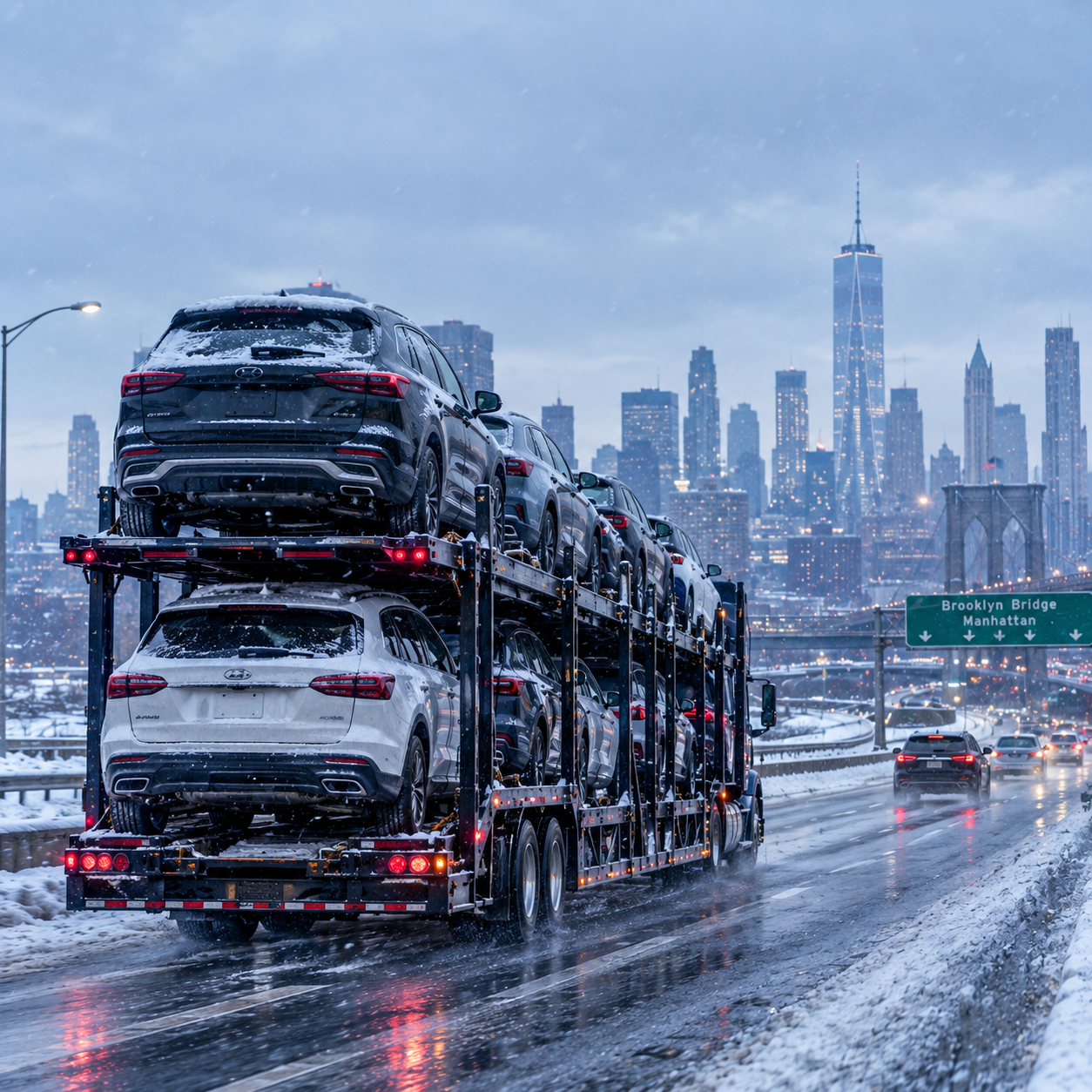
Transporting a vehicle to or from New York during the colder months requires taking changing road conditions into account. Snow, ice, low temperatures, and precipitation can affect traffic and make certain routes more challenging to navigate.
These conditions can vary throughout the same journey. One road may be clear while another area is dealing with accumulated snow or ice. As a result, the usual conditions along a route can change throughout the season.
For anyone arranging long-distance vehicle transport, understanding these conditions helps set more realistic expectations and highlights why road conditions are an important part of the transport process.
Snow and Ice: Factors That Can Change a Route
Snow and ice can directly affect how transport carriers travel. Affected roads may require lower speeds, extra caution, or even route changes when certain areas become difficult to navigate.
This can be especially important when transporting a vehicle between states, since a route may pass through several areas with different weather conditions. The journey is not determined by distance alone, but also by the conditions encountered along the way.
When these circumstances affect traffic, estimated transit times may need to be adjusted. Prioritizing safe travel allows the transport to continue responsibly, even when part of the route needs to be adapted.
What to Consider When Transporting a Vehicle During the Winter
If you are considering transporting a vehicle to, from, or within New York during the colder months, planning your shipment in advance can be especially helpful. Pickup and delivery dates should allow for the possibility that road conditions may affect the route.
It is also important to provide accurate information about the vehicle, pickup location, and destination. These details help coordinate the service properly and identify any specific considerations related to the shipment ahead of time.
Another important factor is understanding that estimated transit times can change when driving conditions are affected. Allowing some flexibility when scheduling your transport can make coordination easier and help avoid relying on overly tight timelines.
The Planning Behind a Transport During Winter Conditions
Vehicle transport during this time of year requires careful coordination from the very beginning. Reviewing expected conditions, assessing the route, and coordinating schedules can all contribute to a more efficient transport process.
For long-distance shipments, this preparation becomes even more important. Conditions can change as the vehicle travels through different states, making clear communication essential for keeping the owner informed about any relevant adjustments along the way.
For the customer, receiving accurate information from the initial coordination through delivery helps set realistic expectations. When road conditions can change, responsible planning helps prioritize safety and keep the transport organized from beginning to end.
Ready to take your car to your next destination? Request a quote and receive guidance from a Cayad Auto Transport specialist by calling (469) 619-0747.
Talk to a real transport specialist.
Get a clear, no-obligation estimate for your exact vehicle and route.